Battery Diaries Chapter 9: My First International Battery Research Experience 🌍
🌍 Why I Chose an International Research Internship and How I Got There?
When I first became interested in batteries and started exploring the field in 2023, one of the greatest challenges I faced was the lack of laboratory experience. Since battery science is fundamentally a science of materials, interfaces, and electrochemical processes, many of the concepts I encountered remained abstract. I could read about electrodes, electrolytes, slurry preparation, cell assembly, and electrochemical reactions, but without seeing them in practice, my understanding felt incomplete.
Entering a battery laboratory as an observer became one of the first major turning points in my journey. Concepts that had previously existed only in textbooks, research papers, and lecture notes gradually became tangible. Watching researchers prepare electrodes, assemble cells, and conduct electrochemical measurements helped me connect theory with reality in a way that no book could.
However, observation was only the first layer of learning.
There is a limit to how much you can learn by watching someone else perform an experiment. Until you put on your own gloves, prepare your own samples, and make your own mistakes, there remains a considerable gap between understanding research and actually doing research.
Joining a TÜBİTAK-funded research project allowed me to take the next step. This time, I was no longer standing beside the laboratory bench as an observer. I became actively involved in preparing samples, conducting experiments, collecting data, and discussing the results with my supervisor. Carrying out the experiments myself significantly improved not only my understanding of battery research but also my laboratory discipline, practical skills, and confidence.
Nevertheless, this stage also had its own limitations.
My primary role within the project was to prepare samples, perform the planned experiments, collect the results, and evaluate the data together with our supervisor. The central research question and the overall direction of the project were naturally determined by the project’s objectives and by my supervisor’s scientific vision, rather than by my own curiosity or independent research questions.
This was, of course, an essential part of learning how scientific research is conducted. Yet, over time, I began to feel that I needed a broader research environment—one where I could be exposed to different scientific perspectives, larger research teams, and a wider range of experimental approaches.
The laboratory where I worked at Gebze Technical University was an excellent research environment and provided me with an invaluable foundation. However, compared with some of the larger battery research centres in Europe, its infrastructure and scale were naturally more limited. During my time there, the research group was relatively small and consisted entirely of researchers from Türkiye.
At that point, I felt that the next stage of my development should take place in a larger and more international research environment.
🏋️ A Simple Analogy
I often compared this process to strength training. After working with a ten-kilogram dumbbell for a long time, improvement requires moving on to fifteen or twenty kilograms. It was not because the previous weight had become unimportant, but because continuous growth demands new challenges.
Shortly after joining the TÜBİTAK project, I began making small but consistent preparations for my next step. As part of my Chemical Engineering degree, I was required to complete two mandatory internships, neither of which I had completed at that time. I set myself a clear goal: at least one of these internships should be directly related to battery research and, if possible, take place in Europe or another international research environment.
I started sending emails to companies, research centres, universities, and research institutes across Japan, the United States, and Europe. I reorganized the work I had already published on my website, incorporated it into my CV, and tried to communicate my enthusiasm for battery research as clearly and sincerely as possible.
I sent dozens of emails and submitted applications to numerous institutions. Most of them resulted either in rejection or no response at all. In fact, if I can still find them in my archive, I plan to include a few of those rejection emails in this chapter. Looking back, I realize they were just as important as the acceptance letter that eventually arrived. The opportunity to work abroad did not come from a single perfect application it emerged after many unsuccessful attempts.

Examples of internship applications and responses I received while searching for an international battery research opportunity.
At first, my priority was to complete my internship in the industrial sector, particularly at a battery manufacturer or production facility. I therefore focused my initial applications on battery companies and factories. I also attended career seminars organized by the Volta Foundation, hoping to expand my professional network and discover internship opportunities within the battery industry.
Unfortunately, those applications did not lead to a position.
Rather than giving up, I changed my strategy.
Instead of applying primarily to companies, I began contacting university professors, battery research laboratories, and research institutes directly. I already knew that Germany, Sweden, and Finland were among Europe’s leading countries in battery research. As I expanded my search, I discovered many outstanding research groups and laboratories that I had never encountered before.
In total, I applied to approximately thirty research groups and institutions across Europe.
Eventually, I received two positive responses: one from an academic at Technische Universität Braunschweig in Germany and another from Uppsala University in Sweden.
After carefully evaluating both opportunities and discussing them with my professors in Türkiye, I concluded that the Ångström Advanced Battery Centre (ÅABC) at Uppsala University would provide the best environment for both my scientific development and long-term career goals. I therefore decided to continue the process with Professor Reza Younesi and his research group.
To formalize the internship and ensure its recognition by my university, I applied through the Erasmus+ Traineeship Mobility Programme and completed all the required administrative procedures.
This was how the journey that would eventually take me to Sweden began.
🏛️ Entering a Different Research Culture
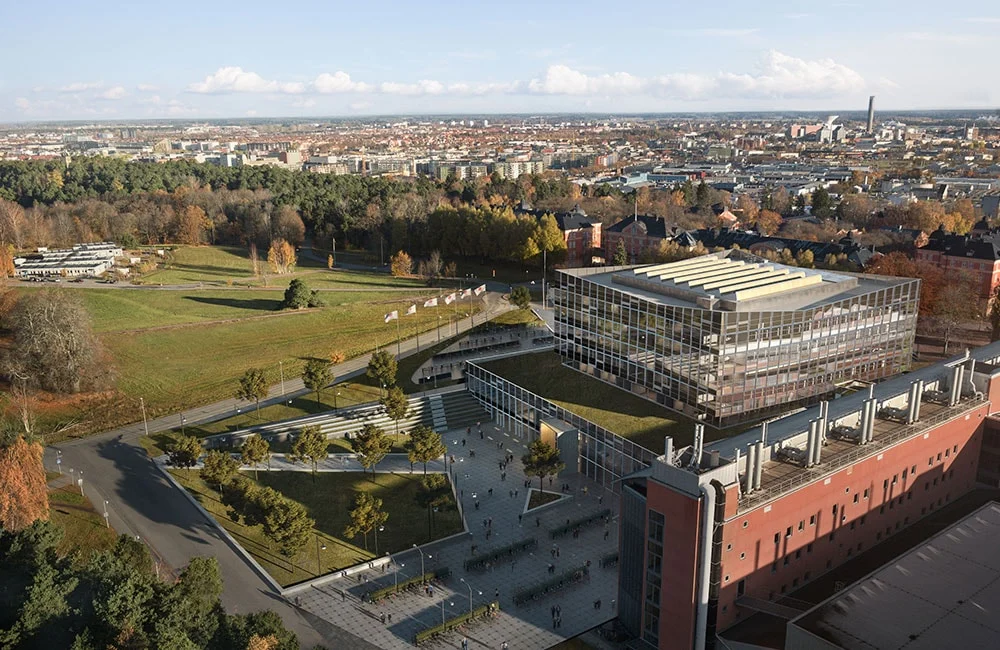
After arriving in Uppsala, the first day began with the administrative procedures required to officially join the institute. After completing my registration and receiving my personal access card, I met my supervisor, Dr. Charles Aram Hall, who introduced me to the Ångström Advanced Battery Centre, including the offices, laboratories, and common areas where I would spend the next three months.
Before my first project meeting, however, I received an assignment that immediately reflected the research culture of the group. Rather than being given a laboratory task, I was first asked to read several scientific papers related to the project and prepare myself for the discussion. I carefully read the articles, took notes, and tried to understand both the scientific background and the challenges that the group was currently working on. By the time I entered the meeting room, I realized that my internship had already begun not with experiments, but with the literature.

📷 My first project meeting with Prof. Dr. Reza Younesi, Dr. Charles Aram Hall, and Ph.D. candidate Jan Felix Schuster.
During the meeting, Professor Reza Younesi introduced the scientific problem that had recently attracted the group’s attention. My internship project would focus on the development of low-temperature electrolytes for lithium-ion and sodium-ion batteries, with the broader objective of understanding the factors limiting battery performance under sub-zero conditions. Instead of assigning me a predefined list of experiments, the project was presented as an open research question that I would gradually explore throughout the internship with continuous guidance from my supervisor Aram and Ph.D. researcher Jan Felix Schuster.
This was one of the biggest differences I experienced compared with my previous laboratory work.
Until then, I had mostly worked within well-defined experimental plans. The objectives were already established, the weekly tasks were clearly assigned, and my responsibility was to carry out the experiments as accurately as possible. At Uppsala, the expectation was different. Rather than simply following an existing plan, I was encouraged to understand the problem, review the literature, discuss possible approaches, propose experiments, evaluate the results, and continuously refine the next steps together with the research team.
Of course, I was never left alone. Whenever I encountered difficulties, I could discuss them with Aram, Jan, or Professor Younesi. Their guidance was always available. However, instead of telling me exactly what to do each day, they encouraged me to think through the problem myself before asking for direction. Looking back, I believe this approach was one of the most valuable aspects of the entire internship. For the first time, I felt that I was not only learning how experiments are performed—I was beginning to learn how researchers think.
Before starting any laboratory work, I also completed the institute’s mandatory laboratory introduction and safety training. One aspect that particularly impressed me was that these introductory sessions were compulsory for everyone joining the institute, regardless of their academic position. Whether you were an undergraduate intern, a Ph.D. student, a postdoctoral researcher, or even a newly appointed professor, everyone was expected to complete the same introductory training before working in the laboratories. I found this to be a simple yet powerful reflection of the institute’s research culture: scientific experience did not exempt anyone from laboratory safety or good research practice.

Only after completing these introductions was I ready to begin the practical side of the internship. The following days would be devoted to learning the laboratories, understanding the glovebox systems, preparing electrolytes, and eventually assembling and testing my first battery cells.
🧪 Understanding the Research Problem
During my internship, I worked on the development and evaluation of low-temperature electrolytes for lithium-ion and sodium-ion batteries. Although rechargeable batteries perform remarkably well under room-temperature conditions, their performance deteriorates rapidly as the temperature drops. This challenge affects not only electric vehicles operating during Scandinavian winters but also aerospace systems, military applications, polar expeditions, and many other technologies that must function reliably in harsh environments.
Our research aimed to better understand these limitations and investigate electrolyte formulations that could improve battery performance at sub-zero temperatures. Throughout the internship, I prepared different electrolyte formulations, assembled pouch cells, performed electrochemical characterization, analyzed the results together with the research group, and continuously refined the following experiments based on the data we obtained..
The scientific background of low-temperature batteries is a fascinating topic on its own. Questions such as why batteries lose capacity in the cold, why ion transport becomes sluggish, and why the electrolyte often becomes one of the main limiting factors deserve a much deeper discussion than this chapter can provide.
For that reason, I wrote a separate technical article during my internship, where I explain the electrochemical mechanisms behind low-temperature battery operation in much greater detail.
👉 Related Technical Blog:
Link koy
Rather than repeating those technical explanations here, I would like to continue sharing the research experience itself what it was like to work on this problem inside one of Europe’s leading battery research centres and what I learned throughout the process.
Preparing My First Electrolytes
One of the first practical stages of my project was learning how to prepare battery electrolytes. At first, the process appeared relatively simple: select the solvents, add the salt and additives, and mix the components in the required proportions. In practice, however, I quickly realized that electrolyte preparation required far more precision and discipline than this simple description suggested.

Inside the glovebox, I prepared different formulations using combinations of carbonate-based solvents, sodium salt, and functional additives. Before each preparation, I calculated the required quantities in my laboratory notebook and discussed the formulation with Aram or Jan whenever I was uncertain about a step.
What made this stage particularly valuable was that I was not preparing the same electrolyte repeatedly according to a fixed recipe. We tested different formulations, compared their electrochemical behaviour, and used the results to decide what should be changed in the following experiments.

Some of the first formulations did not perform as expected. Instead of treating these results simply as failures, we discussed possible reasons such as the formation protocol, chemical condition, cell preparation, and compatibility between the electrolyte and the electrodes. Gradually, this process led us toward a more reliable baseline formulation for the subsequent low-temperature experiments.
This was one of the first moments during the internship when I clearly understood that experimental research rarely follows a straight line. Preparing the electrolyte was only the beginning; each result determined what we would try next.
🔋 Working with Commercial Pouch Cells
One of the first battery formats I worked with during my internship was the commercial LiFUN pouch cell. Unlike laboratory-made cells, these pouch cells were supplied by LiFUN Technology and were already assembled internally. My role was not to build the entire cell from scratch, but to inject the prepared electrolyte, complete the sealing process, and carry out the electrochemical tests under different operating conditions.
This was my first experience working with commercial pouch cells, a battery format much closer to those used in industrial research than the coin cells I had previously assembled. It was exciting to see how a carefully prepared electrolyte could be introduced into a commercially manufactured cell and then evaluated through a series of electrochemical experiments.

After injecting the electrolyte, the cells were placed under vacuum to ensure proper wetting of the electrodes and separator before the final sealing step. Although the procedure itself followed a standardized protocol, every step required patience and attention to detail. A small mistake during sealing or electrolyte injection could influence the performance of the entire cell.
Once sealed, the pouch cells were transferred to the battery cyclers, where they underwent various electrochemical tests over the following days and weeks. Watching the first cells that I had prepared being connected to the cyclers was one of those moments that made me realize I was no longer simply observing battery research. I had become an active part of it.
As the experiments progressed, some of these commercial pouch cells were later opened again for post-mortem analysis. Disassembling the cells provided another opportunity to better understand how electrochemical testing affects the internal components of a battery and prepared me for the next stage of my project.
🔬 Building My Own Three-Electrode Pouch Cells
While commercial pouch cells were used to evaluate different electrolyte formulations under realistic conditions, another part of my internship involved preparing three-electrode pouch cells for more detailed electrochemical investigations.
Unlike the commercial cells, these were assembled manually inside the laboratory. Before the electrodes were even placed inside the pouch, the cell housing itself had to be carefully prepared. Every layer had a specific purpose, and even the position of each component required attention to ensure reliable electrochemical measurements later on.
Assembling these cells gave me a much deeper appreciation of how much work takes place long before any electrochemical measurement begins. A successful experiment does not start when the battery cycler is switched on it starts with careful preparation, patience, and consistency during cell assembly.
Once the pouch structure was ready, the working electrode, counter electrode, reference electrode, separator, and electrolyte were introduced according to the experimental design. Compared with the commercial LiFUN cells, this process provided much greater flexibility, allowing us to investigate individual electrochemical processes in much greater detail.
These custom-built cells later became an essential part of my impedance spectroscopy (EIS) studies and helped us better understand how different electrolyte formulations influenced the electrochemical behaviour of the battery.
Although assembling the cells required patience, I found the process particularly enjoyable. It was another reminder that battery research is built upon countless careful manual operations, many of which remain invisible when we only look at the final electrochemical results.
☕ Research Happens Beyond the Laboratory
Although a significant portion of my internship was spent preparing electrolytes, assembling cells, and carrying out electrochemical experiments, I soon realized that battery research extends far beyond the laboratory bench. Every experiment was only one part of a much larger scientific process. Reading literature, discussing unexpected results, questioning hypotheses, and exchanging ideas with other researchers were just as important as the experiments themselves.
One of the aspects I appreciated most at the Ångström Advanced Battery Centre was the group’s culture of continuous scientific discussion. Research was never treated as an individual activity carried out in isolation. Instead, it was a collaborative process in which new ideas, unexpected observations, and even unsuccessful experiments became opportunities for collective learning.

Every Monday, the research group gathered for the Monday Seminar, where members presented their recent work, shared experimental results, and discussed challenges they had encountered during the previous week. These meetings covered a wide range of battery research topics, extending well beyond my own project. Listening to discussions on different battery chemistries, characterization techniques, and research approaches gave me a much broader perspective than I could have gained by focusing solely on my own experiments.
Alongside the Monday Seminars, I also participated in the Sodium Group Meetings, where our discussions became much more closely related to my own project. Here, we reviewed the latest experimental results, interpreted electrochemical data, evaluated possible explanations, and planned the next set of experiments together. It was fascinating to see how each new result—whether successful or unsuccessful generated new scientific questions rather than simple conclusions.
One experience that I found particularly valuable was having the opportunity to present my own work to the group. Preparing for these presentations encouraged me to organize my thoughts more clearly, critically evaluate my own experimental results, and explain my reasoning to experienced researchers. The discussions that followed were often just as valuable as the presentations themselves, frequently leading to new ideas or different ways of interpreting the data.
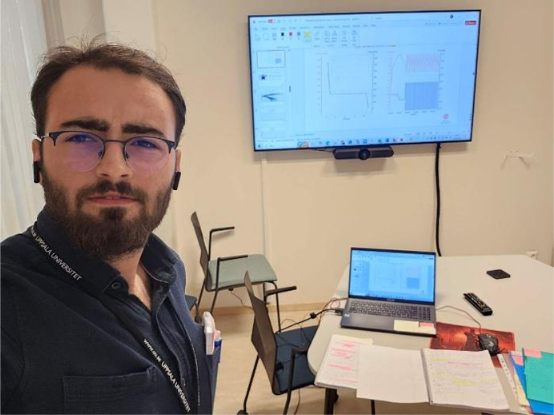
Looking back, these meetings changed my understanding of scientific research. Before arriving in Sweden, I tended to think that research mainly happened at the laboratory bench. During my internship, I realized that many of the most important scientific decisions were actually made around a meeting table, where researchers openly questioned each other’s ideas, challenged assumptions, and collectively searched for better explanations.
For me, this collaborative research culture became one of the most memorable aspects of the entire internship. It showed me that good science is not only built through careful experiments but also through continuous discussion, constructive criticism, and the willingness to learn from others.
❄️ Taking the Cells Below Zero
Once the pouch cells had been prepared and sealed, the next stage was to observe how they behaved under low-temperature conditions. The cells were connected to the Neware battery testing system, where we could design charging and discharging protocols, monitor capacity, follow voltage changes, and compare their performance over repeated cycles.
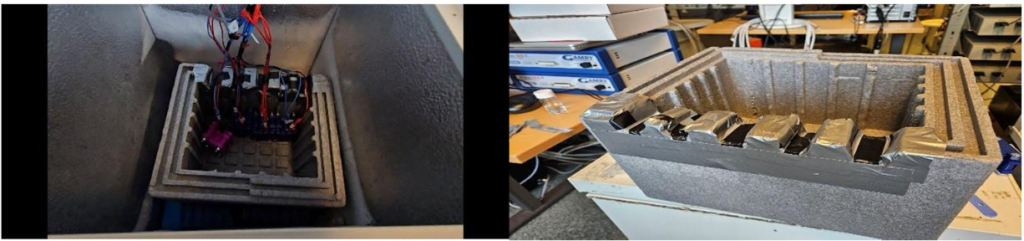
However, connecting the cells to the cycler was only part of the challenge. Since the project focused on performance at sub-zero temperatures, we also needed a stable environment in which the pouch cells could remain at approximately −20 °C throughout the tests.
The available freezer was not originally designed for this type of electrochemical setup. The cells had to remain inside the cold environment while their cables were connected to the testing equipment outside. For this reason, we modified the freezer by creating openings for the pouch cells and cables, then carefully insulated these areas to reduce heat leakage and maintain a stable internal temperature.

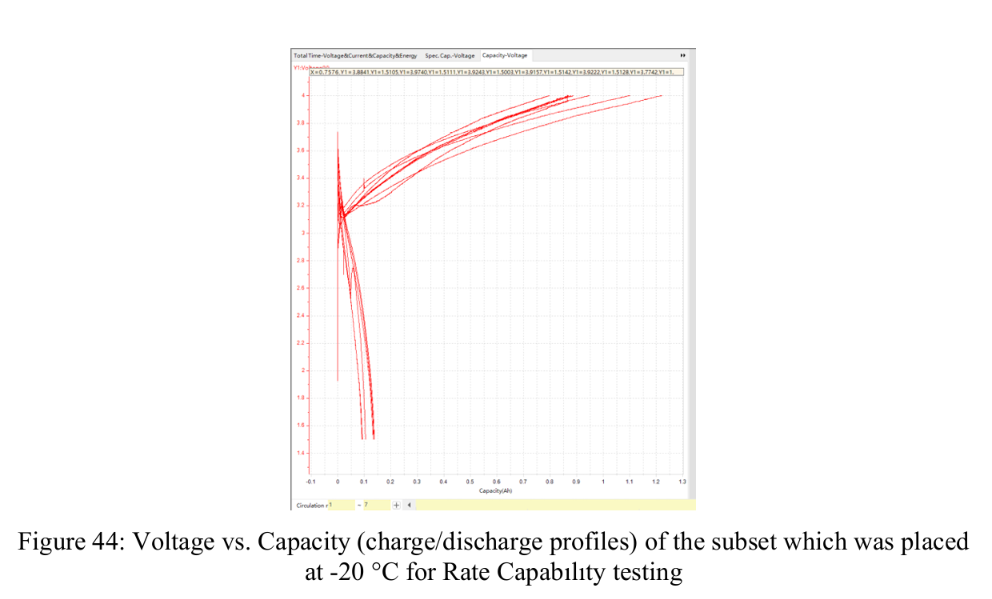
Inside the freezer, the pouch cells were fixed in place and connected to the Neware channels. Some cells were used for rate-capability tests, where their response was evaluated under different current conditions. Others were kept under long-term cycling, allowing us to follow how their capacity and voltage behaviour changed over time at low temperature.
The results immediately demonstrated how demanding cold conditions could be. Although the cells remained functional, their delivered capacity decreased and the voltage profiles showed much stronger polarization than at room temperature. Seeing these changes directly in the experimental data made the effects of low temperature far more tangible than reading about them in the literature.
These experiments also taught me another important lesson about battery research: obtaining data often requires patience. The cells remained connected to the cyclers for days or weeks, and each new result had to be evaluated before deciding how the following experiment should be designed.
The low-temperature setup was therefore more than a freezer containing pouch cells. It was the point where the electrolyte formulations, cell preparation, experimental design, and data analysis all came together.
🌍 Looking Back: More Than an Internship
Looking back, I realize that what I brought home from Sweden was far more valuable than a collection of experimental results or laboratory techniques.
Over the course of 82 days, I prepared numerous electrolyte formulations, assembled and tested more than 70 pouch cells, participated in weekly seminars and research meetings, read scientific literature almost every day, and worked alongside researchers from different countries and academic backgrounds. These experiences undoubtedly strengthened my technical knowledge of battery research, but the most important lessons I learned were not recorded in my laboratory notebook.
What changed most was my perspective on scientific research itself.
Before this internship, I often viewed research as a sequence of experiments carried out inside a laboratory. During my time at the Ångström Advanced Battery Centre, I gradually realized that good research begins long before the first experiment and continues long after the last measurement has been completed. It starts with asking meaningful questions, understanding the literature, discussing ideas openly, accepting unexpected results, and continuously refining the next step based on evidence.
The internship also taught me the importance of scientific independence. For the first time, I experienced an environment where I was encouraged not only to perform experiments but also to think about why those experiments should be carried out, how they should be designed, and what the results actually meant. Knowing that experienced researchers were always willing to guide me while simultaneously encouraging independent thinking became one of the most valuable aspects of the entire experience.
Beyond the laboratory, living in Sweden and becoming part of an international research environment was equally transformative. Working with people from different countries, exchanging ideas across cultures, and observing different approaches to scientific collaboration broadened my perspective in ways that extended well beyond battery research itself.
When I first entered a laboratory as an observer in 2023, I simply wanted to understand how battery research was conducted. A few years later, I found myself carrying out research at one of Europe’s leading battery centres. Looking back at that journey, I realize that each stage naturally prepared me for the next—from observing experiments, to participating in a TÜBİTAK research project, to strategically choosing my undergraduate projects, and finally to conducting research abroad.
This internship was not the destination of that journey.
It was another important step.
As I write these lines, I have already begun preparing for the next chapter of my academic journey. There are still countless questions waiting to be explored, new techniques to learn, and many more laboratories to visit. Battery research continues to evolve rapidly, and I hope to continue growing alongside it.
Thank you for following this chapter of my Battery Diaries.
See you in the next chapter.


3 yorum